The most useful question is not whether AI can write another social post. It is whether one workspace can reduce the friction between a useful idea, a suitable format and a reviewed piece of content that you are willing to publish under your name.
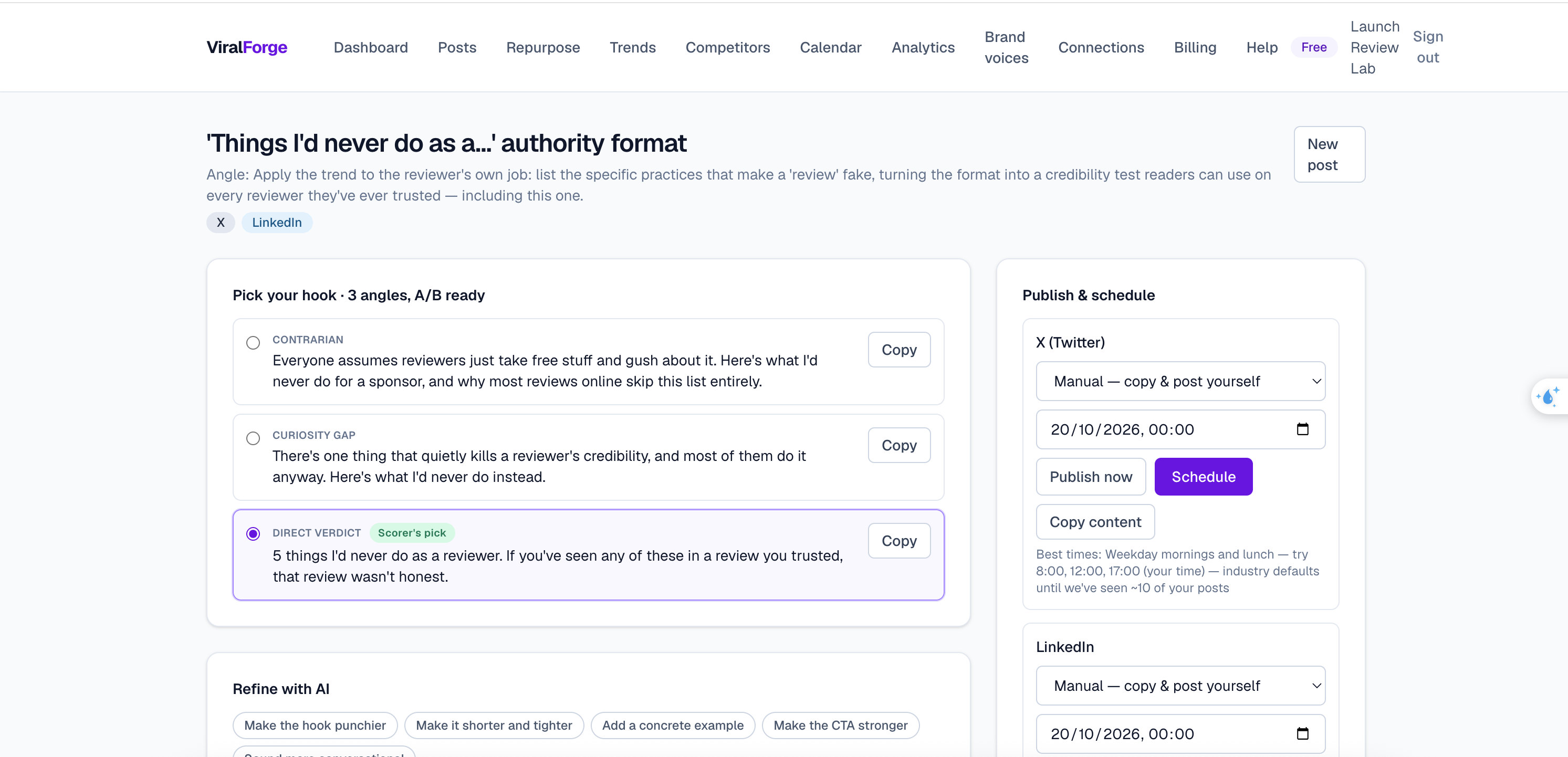
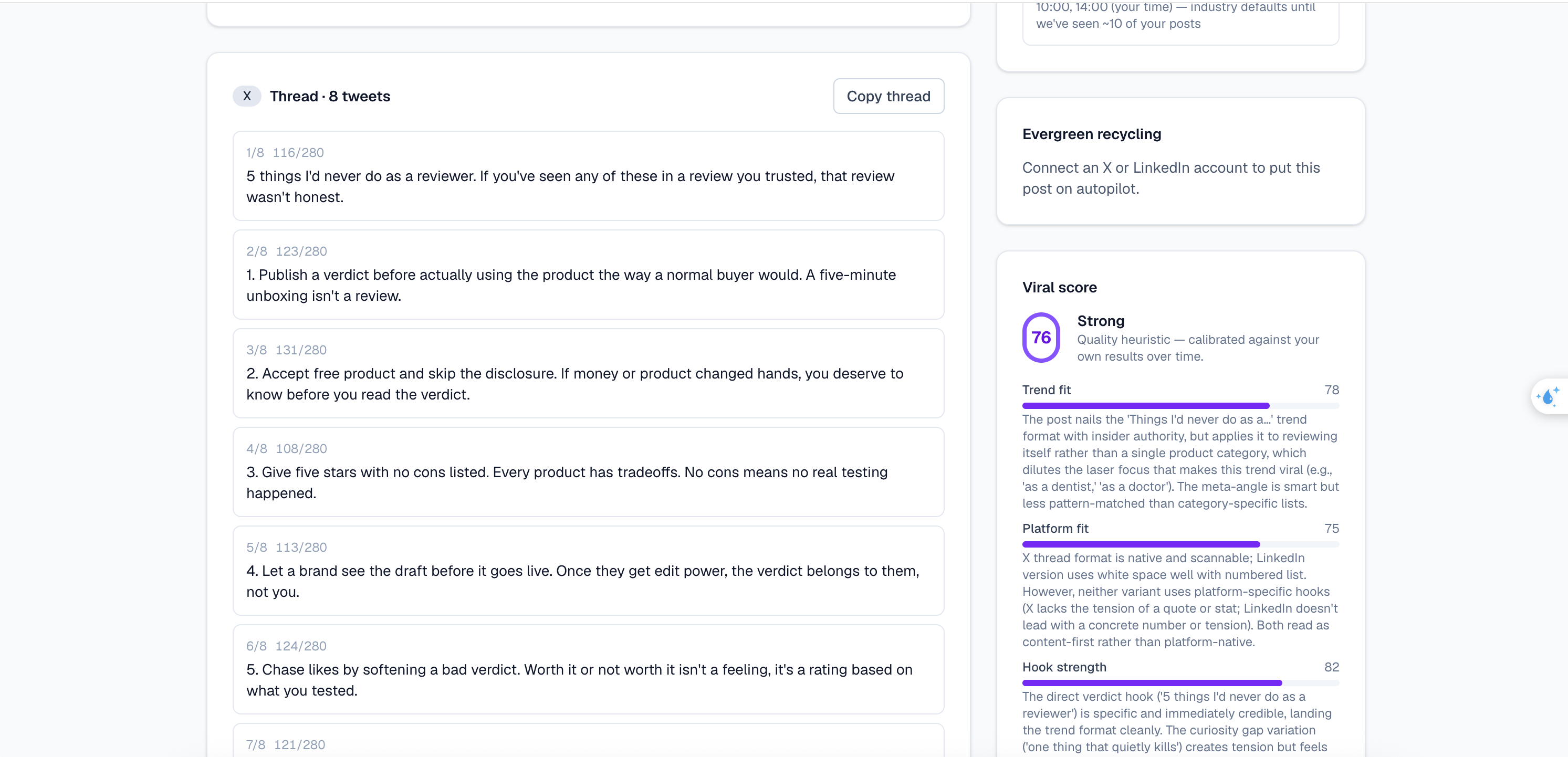
The supplied screenshots show trend ideas, a topic and voice composer, alternative hooks and a generated thread. They also show a manual publishing mode. That combination points to a practical drafting-and-review use case, not evidence of hands-off growth. Read the main ViralForge review for the complete evidence boundaries.
Personal brands with expertise but an inconsistent writing habit
A consultant, educator or founder often already has the raw material: repeated customer questions, a considered opinion or a useful lesson from real work. Turning it into a strong opening and a coherent thread is the separate job. A tool that presents alternative hooks and platform-specific structure can help make that job more deliberate.
The best input is genuine substance. Bring the example, qualification and point of view yourself. Do not ask the tool to invent a client result or describe an experiment you did not conduct simply because the selected trend format is first-person.
Small teams with a clear brand voice and a review owner
The composer’s saved-voice selection is relevant for businesses that want a consistent tone across repeated drafts. It can also make a shared brief easier: define the intended reader, approved claims, language to avoid and the desired action before generation.
A visible dropdown is not a complete team governance system, however. Check actual seats, client permissions and approval controls rather than assuming them. Keep a person responsible for the final text even if the scheduled destination is connected.
Creators who want to adapt one idea—not repost it everywhere unchanged
A concise X thread and a LinkedIn post should not be identical copies with different line breaks. Platform-aware output is useful when it adapts the opening and structure while keeping the underlying claim accurate. The sample quality panel itself distinguishes platform fit from hook strength, which is the right distinction to consider during review.
Limit the first workflow to channels you actually maintain. Generating for more destinations than you can review can create a backlog rather than save work. Our ViralForge workflow guide walks through that sequence using the supplied captures.
Who should pause before buying?
| Requirement | Why it needs caution | What to establish first |
|---|---|---|
| Finished short-form videos | The described output is a script and shot list, not proven rendered video. | A documented rendering feature in the actual plan, or a separate production tool. |
| Guaranteed views or sales | A viral score is a heuristic, not a reach or revenue guarantee. | A realistic content strategy and your own measurement process. |
| Unattended publishing to every channel | The supplied captures show manual modes and a connection requirement. | Supported destinations, account permissions and successful delivery checks. |
| A large client operation | The screenshots do not establish seats, client rights or account capacity. | The current licence and operational limits. |
Use the viral score as a revision checklist
The 76-point sample score is attached to one generated post. It is not our rating of the software and it does not establish audience response. The valuable part is the explanation: why a hook may be specific enough, or why content may not yet feel native to its destination.
Turn that feedback into a human question. Is the opening clear? Does it create a promise that the body keeps? Is the statement supportable? You can improve these qualities even when no software can predict what the distribution system will do with a particular post.
A realistic way to decide whether it is worth paying for
Because the paid price and allowances are not verified, do not start with a made-up return-on-investment number. Start with your recurring content workload: the channels you use, the number of drafts you can actually review, and the amount of rewriting the tool removes or adds.
When access and terms are clear, use one truthful content brief and evaluate the results against your normal process. Record whether the draft needs factual corrections, voice adjustments or structural changes. A useful tool should improve that real process, not merely increase the number of generated items.
Use the launch pricing checklist before paying, especially for billing, client rights, connected accounts and refund terms. Avoid assuming that every visible screen belongs to the entry licence.
Frequently asked questions
Is ViralForge suitable for beginners?
The captured composer presents a topic field, platform selections and a brand-voice dropdown, which makes the basic drafting sequence understandable. Beginners still need a defined audience and truthful source material. The interface does not remove responsibility for fact-checking and final review.
Can an agency use ViralForge for client content?
The workflow could be relevant to drafting client content, but the supplied evidence does not establish commercial client rights, team seats or account limits. Verify the actual licence before offering client work. Also define who approves each post before publication.
Will it replace a video editor?
The vendor describes short-video scripts and shot lists rather than a complete rendered-video workflow. That can help plan production, but it is not evidence of timeline editing, media assembly or finished exports. Choose tools around the output you actually need.
Should I trust the score more than my editorial judgement?
No. A score can point to possible weaknesses, but it cannot validate facts, prove a customer result or guarantee distribution. Treat its explanation as one input to a human review and compare later performance against your own goals.
Evidence base: owner-supplied interface captures and the public vendor homepage, reviewed October 19, 2026. Paid launch terms remain unverified. This is an affiliate editorial guide, not the official service or evidence of measured performance. Read the disclosure and review method.